Home / Deployment profiles
Section 04 · profiles
Deployment profiles: how on-site jersey personalization gets configured in practice.
We do not publish client names or invent testimonials. What we can do is describe the four configurations we are actually asked for, and the reasoning behind each build, so you can find yours before the first call.
Profile A — the controlled roster day4.1
A team or uniform program owns the jerseys, has a fixed list of names and numbers, and needs the whole lot personalized in one visit. Nothing is decided on the floor.
This is the cheapest configuration per unit and the easiest to schedule. Roster data comes in as a spreadsheet with name, number, size, and colorway. We validate the character counts against the layout before we travel, which surfaces the three surnames that will not fit while there is still time to decide what to do about them. On the day, tickets are pre-staged in the queue, garments are pre-sorted by size, and lanes run without pause.
Two lanes is usually enough. The crew lead runs the QC pass rather than a lane, because on a roster day the only real failure mode is a mismatch between garment and ticket, and someone should be watching for it full time.
Typical build
- Lanes
- 2
- Garments
- Client supplied
- Intake
- Pre-staged roster
- Guest interaction
- Pickup only
- Main risk
- Size-curve mismatch
Profile B — the open activation4.2
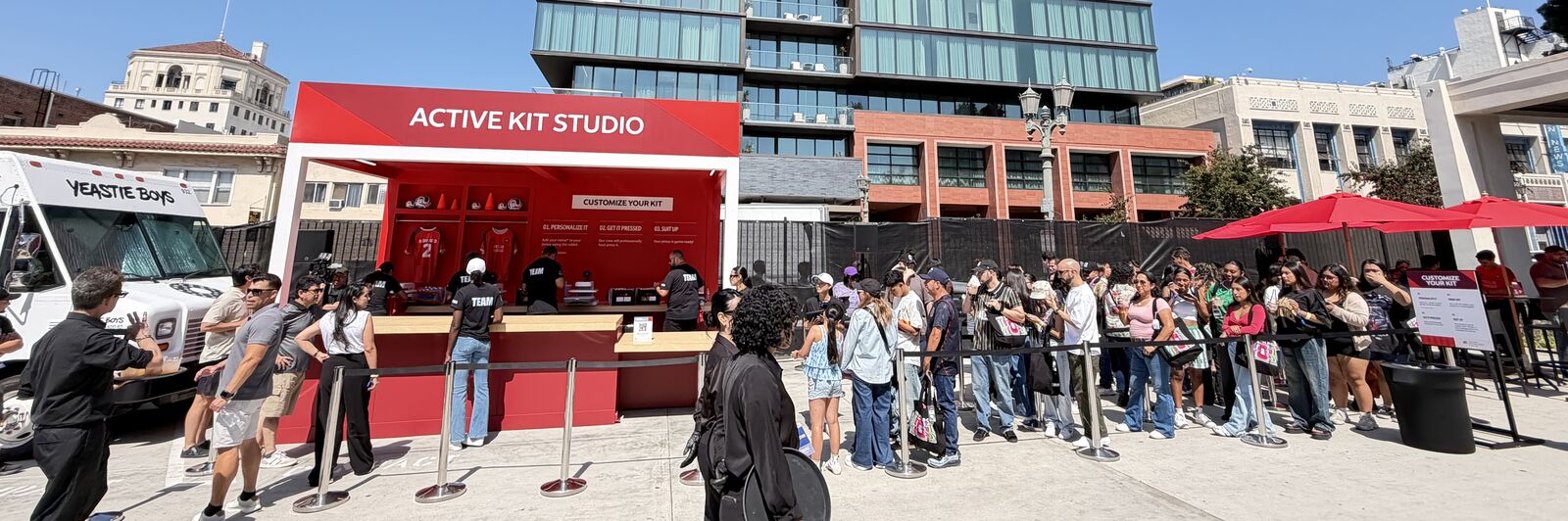
Doors open, anyone can walk up, and the queue is public. Merch Troop crews have run this format at outdoor sport activations with hundreds of guests queuing, including a red kit-studio build with locker bays, tablet stations, and a dedicated pressing crew.
Everything about this profile is queue engineering. Tablet stations sit ahead of the press counter so people are entering names while jerseys are pressing. Tickets go to lanes by least-pending-work, so one complicated job does not stall a whole side of the build. Sizes are capped in the picker so the tablet stops offering an XL the moment the last one is claimed. At premium tiers, guests are texted when their jersey is ready and are free to walk the rest of the footprint instead of standing still.
Four lanes is the common answer here, and large activations scale beyond that.
Profile C — the retail floor4.3
A store or pop-up wants personalization as a purchase add-on. The garments are the store's existing inventory, the customer buys first, and the ticket comes to us with a receipt number on it.
The operational differences are real. Footprint is tight, so the build is compact and often runs from a single counter. Hours are long — retail wants the station live for the whole trading day, not a four-hour window. And the failure tolerance is lower, because the customer has already paid for a garment before we touch it, which makes the fabric test and the counted-in inventory process non-negotiable rather than nice to have.
One to two lanes, a long staffed day, and a very disciplined QC pass. Reprint policy gets written into the agreement before the first shift.
Profile D — the multi-day tournament4.4
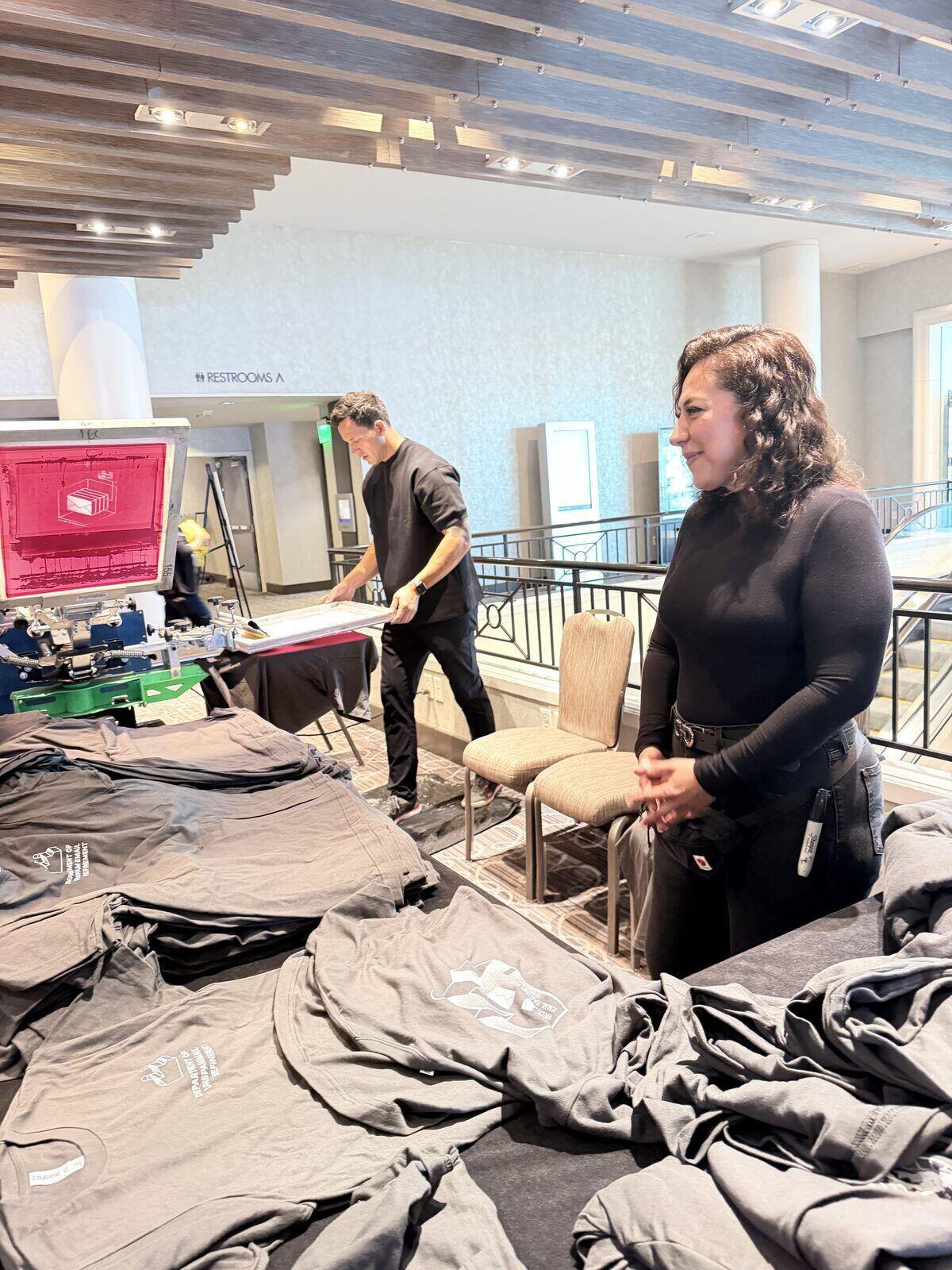
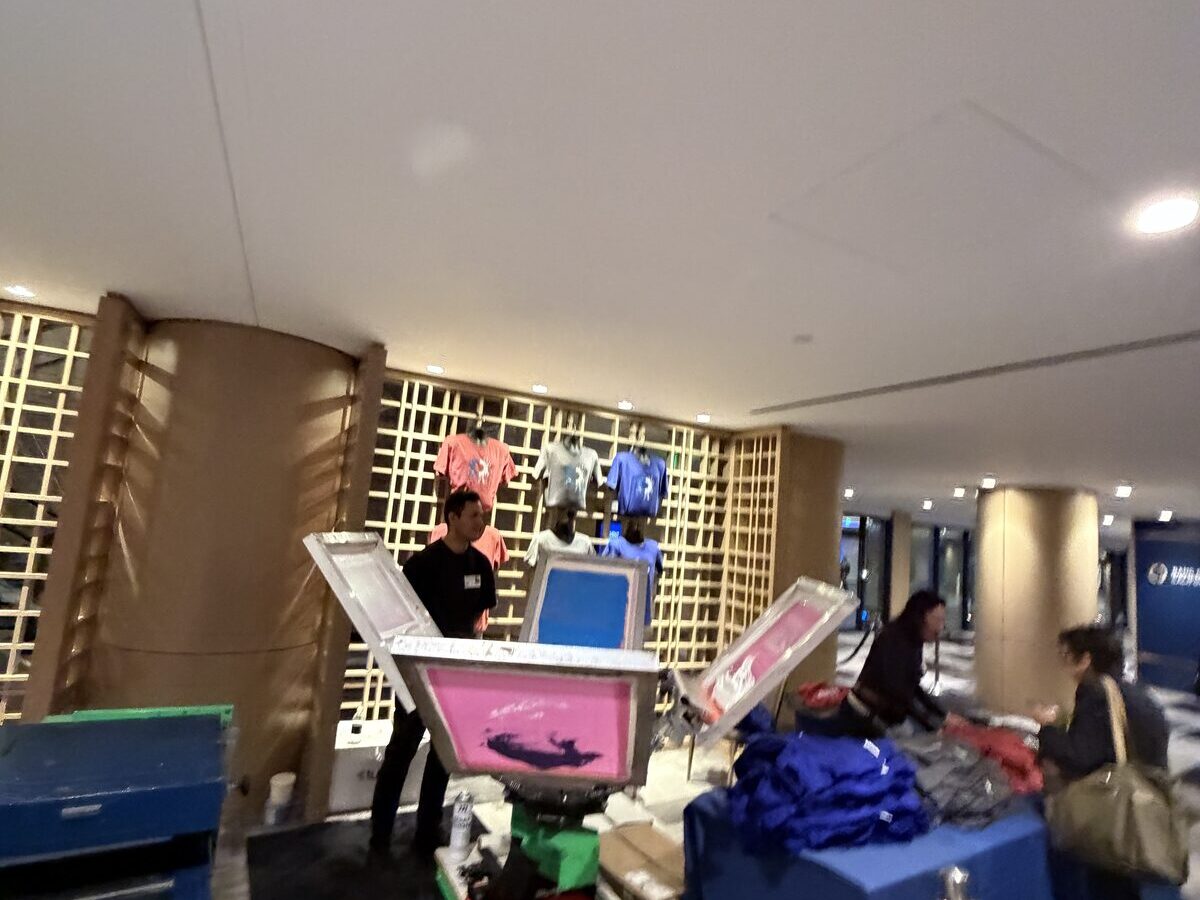
Three days, a shifting population, and demand that spikes around game times rather than spreading evenly. The build stays up overnight, which introduces its own requirements: secured inventory, a nightly count, and a morning calibration pass because a press that sat cold in a hall overnight is not the press you left.
Staffing is planned in shifts against the schedule, not flat across the day. We ask organizers for the game grid early, because two lanes between matches and four lanes for the ninety minutes after a final is a very different labor line than four lanes for three straight days.
End of each day, you get a count: units personalized, units reprinted and why, remaining garment inventory by size, and anything that needs a decision before tomorrow.
Reporting
Every profile above ends the same way. At teardown we reconcile goods in against goods out, hand over the personalization count, note reprints and their causes, and export the intake records so your program has a record of exactly what was applied to what.
Next step
Which profile is yours? Tell us and we will size it.
Send garment source, unit count, venue, and hours on the floor. We reply with lane count, crew size, and a written figure.