Merch Troop · live-event apparel crews · Orange County CA(562) 614-4800 · contact@merchtroop.com
On-Site Jersey
Personalization
Operated by Merch Troop

Home / Photos

Section 03 · documentation

On-site jersey personalization stations, photographed on the job.

These are Merch Troop crews and Merch Troop equipment at real deployments. Nothing here is a rendering, and nothing is attributed to a client we have not been cleared to name. Read the captions as build notes.

Jersey builds3.1
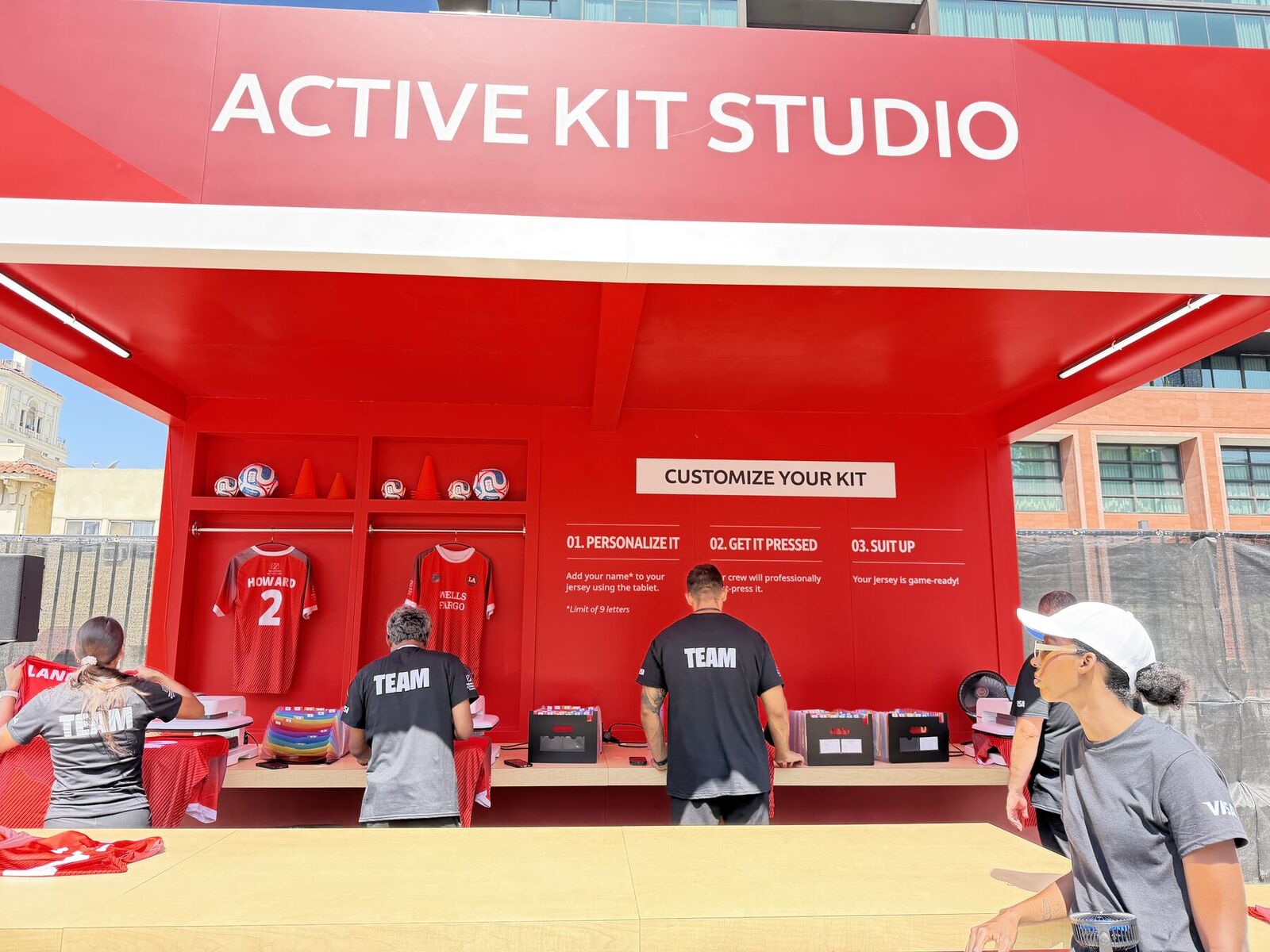
Red jersey kit studio with guests at tablet entry stations on one side and a pressing crew in TEAM shirts working behind the counter
Kit studio, tablet side. Entry stations are physically separated from the press counter so intake and application never compete for the same square footage.
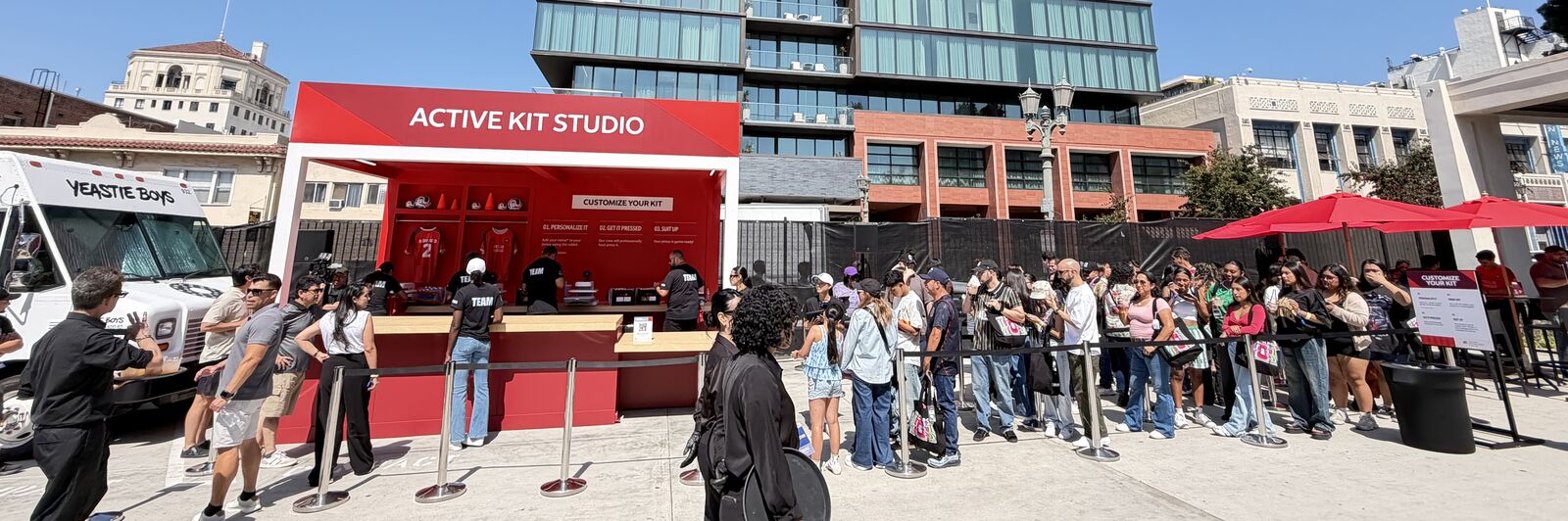
Red outdoor jersey personalization booth on a city plaza, staffed crew at the counter and a long stanchioned guest queue stretching across the concrete
The same format seen from across a plaza. At this scale the queue is the design problem — where it forms, which way it faces, and how far it can grow before it blocks a walkway.
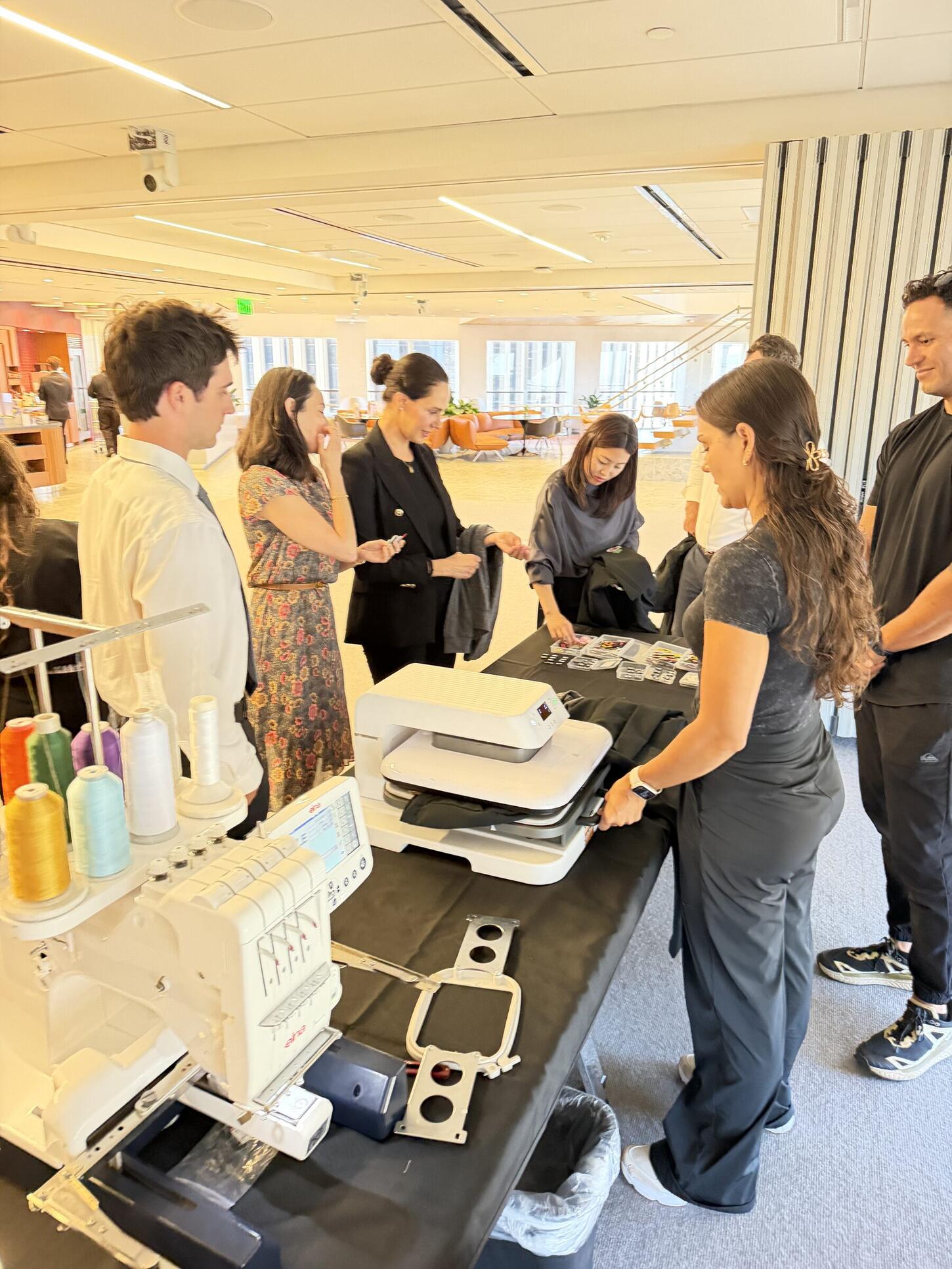
Indoor on-site personalization station with a heat press and an embroidery machine, guests waiting beside the counter
Indoor deployment running a press and an embroidery head from one counter, with a small standing area for guests waiting on a piece.

Load-in, lanes, and companion stations3.2
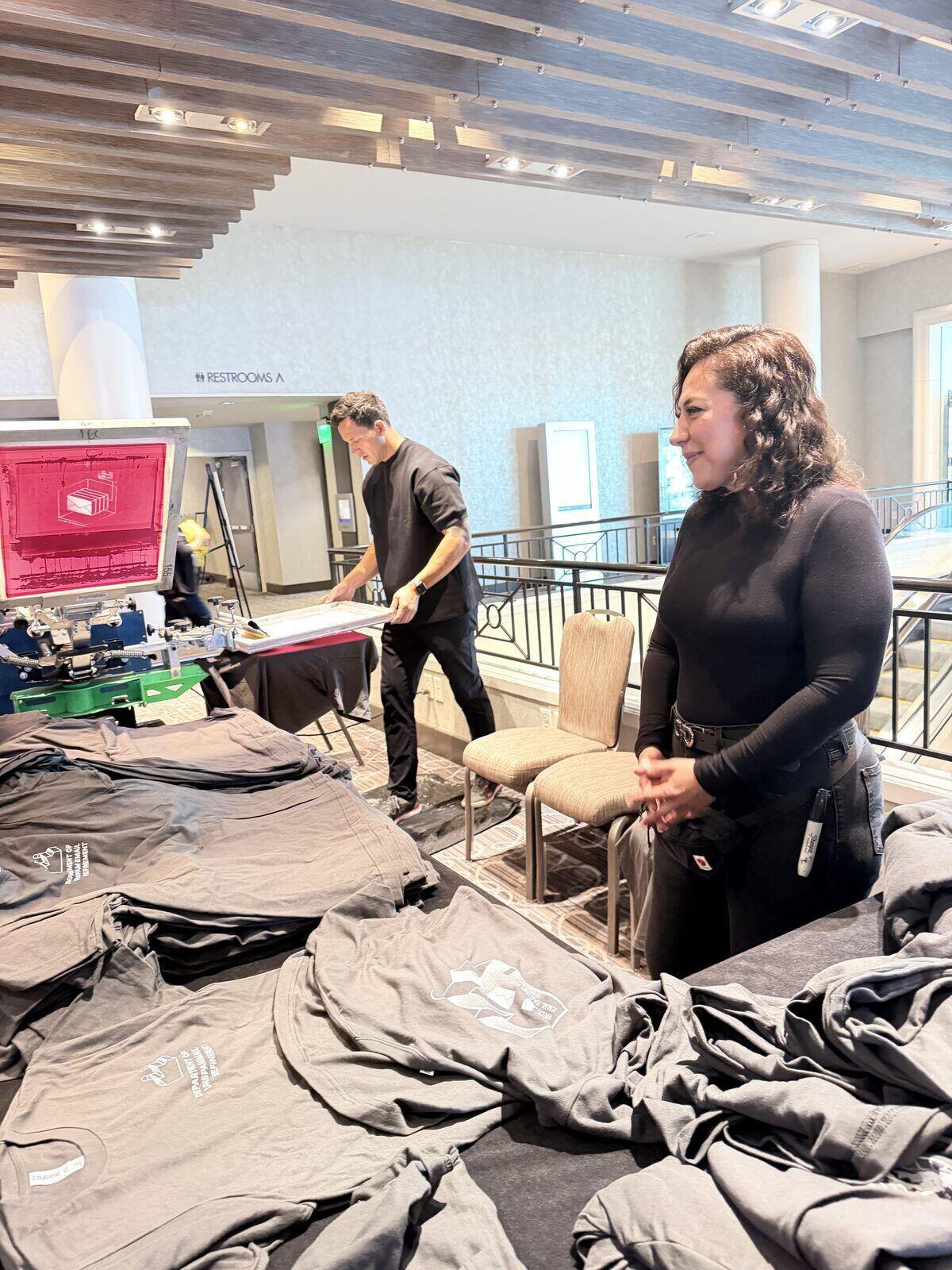
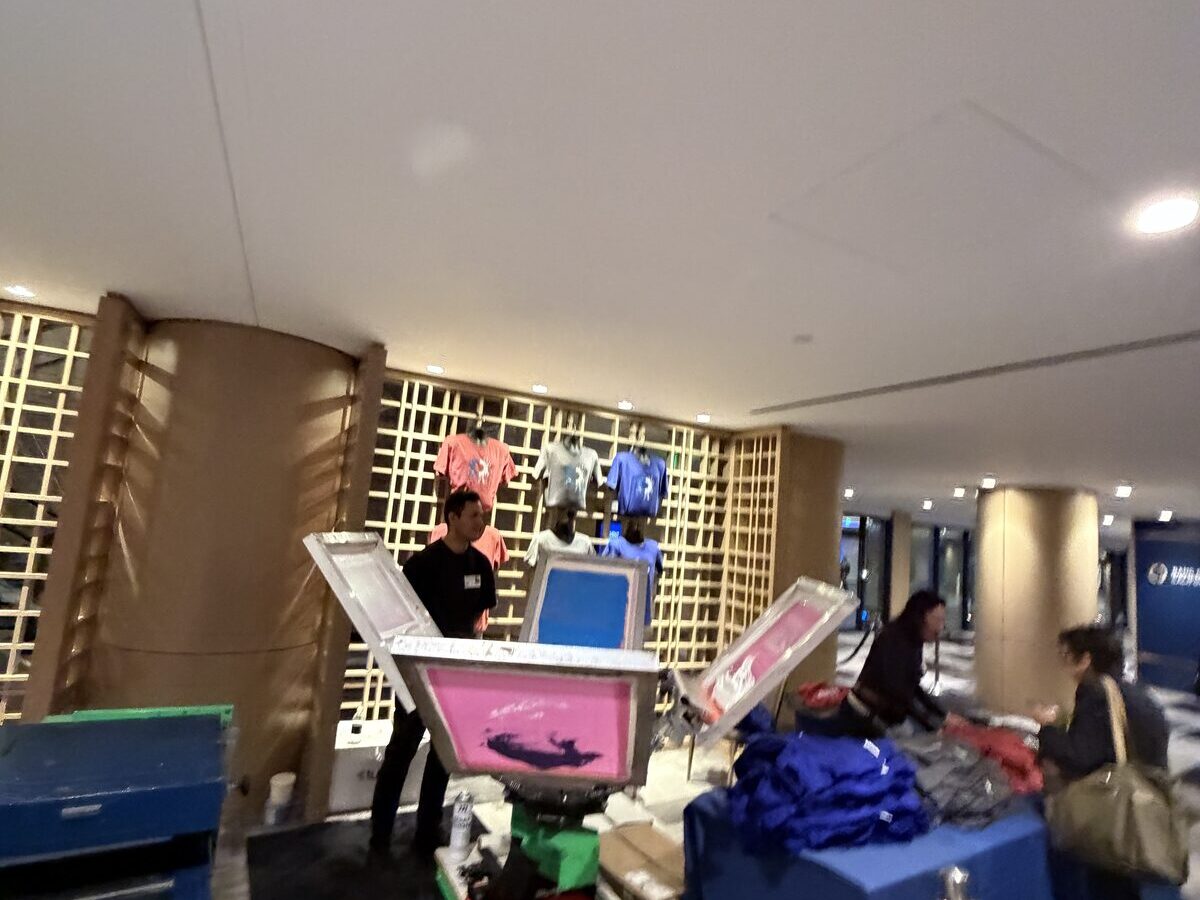
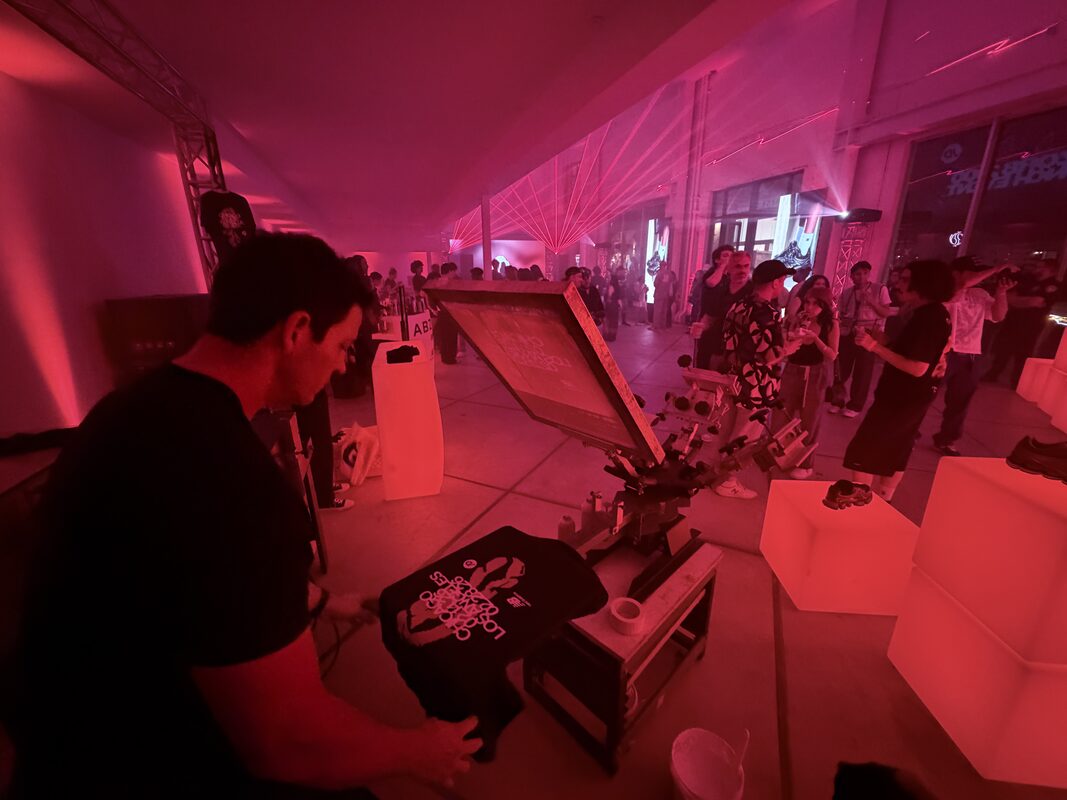
Crew building tables and setting up printing equipment on load-in day before an event opens
Load-in. Presses are placed, powered, heat-soaked, and test-pressed before a guest ever sees the counter.
Compact printing station set up in a building lobby with equipment and product staged on tables
A lobby footprint. Compact builds are common in corporate venues where the station has to coexist with normal building traffic.
Live embroidery machine stitching at an event station with finished items staged on the table
Embroidery running as a companion lane. Slower per unit, so it gets its own queue and its own expectation.
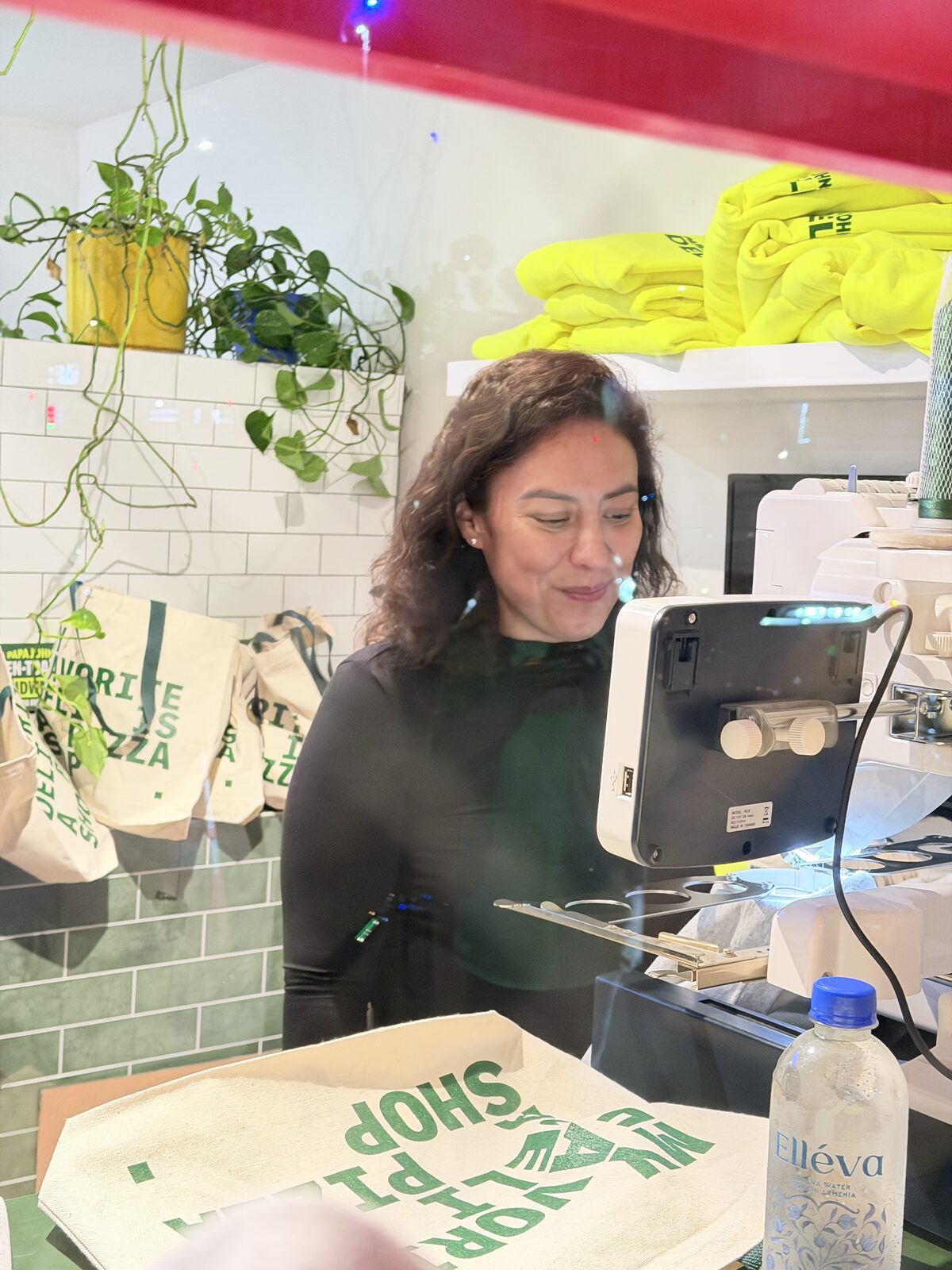
Live tote bag printing station with pressed bags laid out on the work surface
The same crew and the same presses handling a non-apparel item — useful when a jersey program wants a second takeaway.
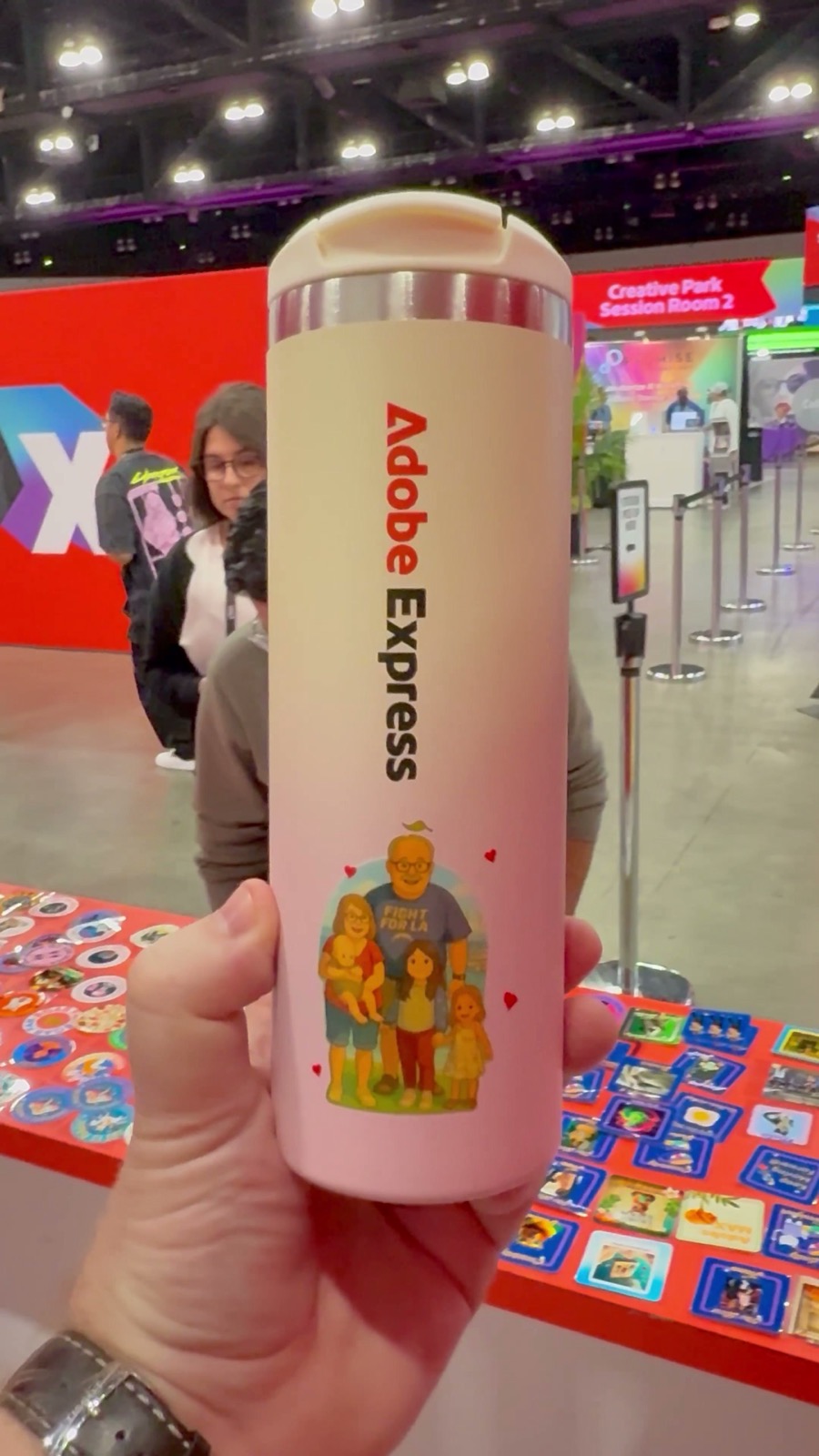
UV DTF sticker station set up at an event with a printer and finished decals on the table
A UV DTF sticker lane. Frequently added to keep the footprint interesting while a heavier jersey queue clears.
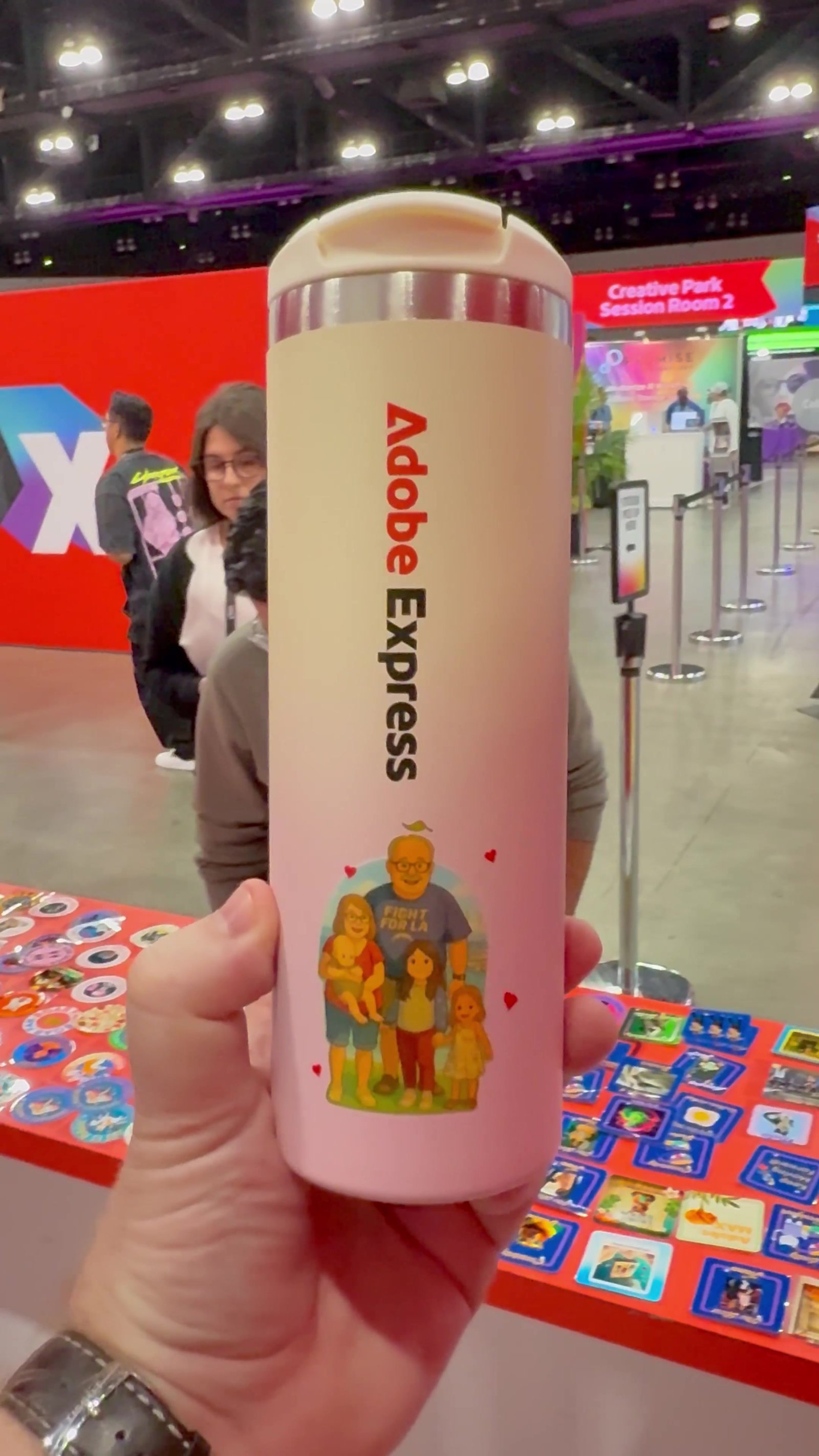
Second UV DTF station view showing printed decals staged next to the machine
Decals staged for application. Small-format work is what a spare pair of hands does between press cycles.

How to read a station photo3.3

If you are evaluating vendors from photographs, three details tell you more than the equipment does.

Look for separation between intake and application. In a build that works, the tablets where guests enter a name are physically apart from the counter where jerseys are pressed. When those two functions share a surface, the press stops every time somebody thinks about a spelling, and the whole line inherits that pause.

Count operators against presses. One person per lane is the ratio that holds quality steady. Four presses and two people in a photograph is two lanes with spare hardware, and it will show in the last hour of an event.

Look at where the queue is standing. A queue is a physical object that grows, and in a well-planned build it has been given a direction — along a wall, away from an egress path, out of a sightline. A line that has wandered into the middle of a walkway is a build that was designed at the truck.

Red kit studio interior with tablet entry stations separated from the pressing counter where crew are working
Intake on the left, application behind the counter. The separation is deliberate.

Finished work and adjacent decoration3.4
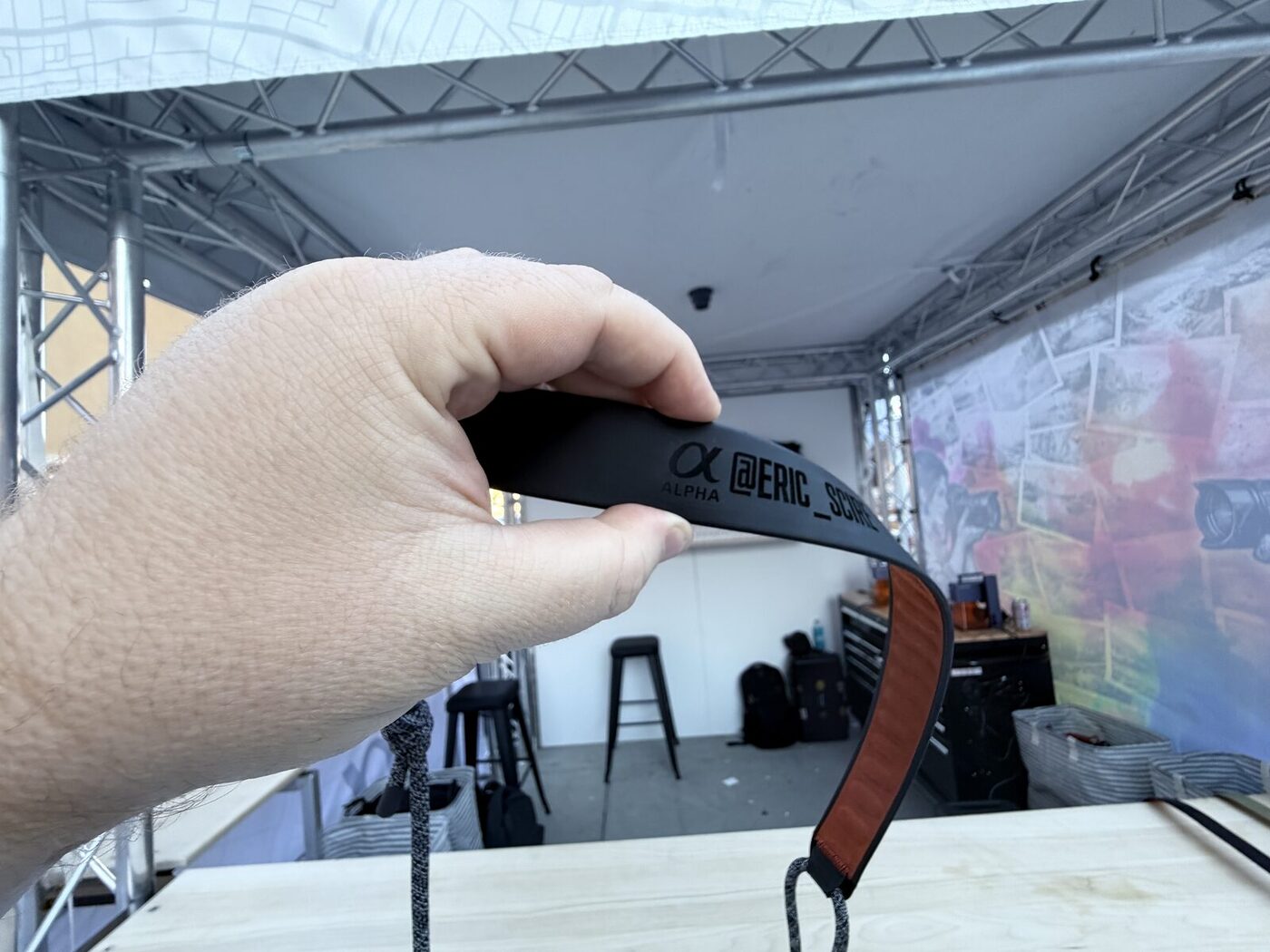
Close detail of an applied patch showing stitch edge and surface texture
Patch detail. The same registration discipline a jersey number needs, at a smaller scale.
Square patch laid flat showing edges and applied finish
A flat patch before application. Programs that want a crest alongside a name and number use these.
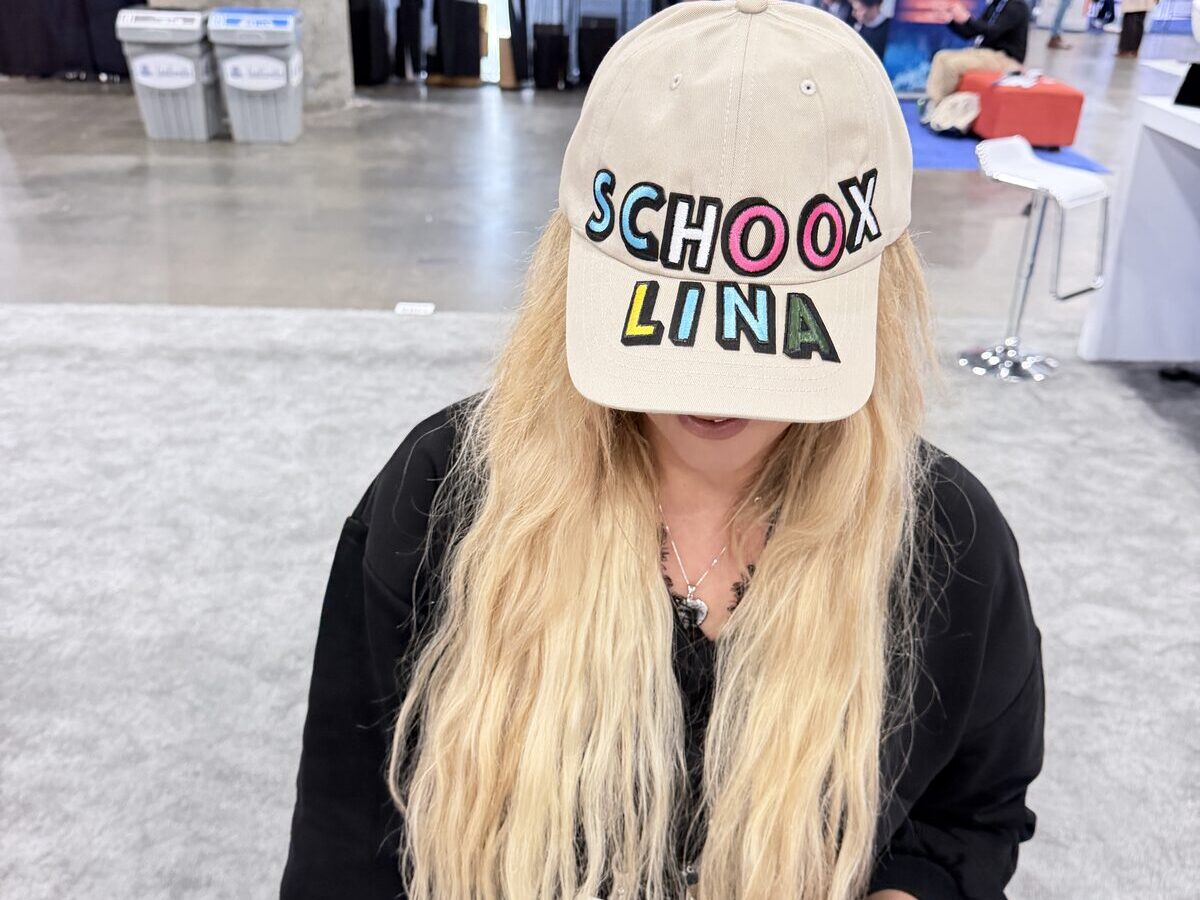
Custom decorated cap photographed on a plain surface
Cap decoration. Richardson 112 and Flexfit bodies are the usual choices when a jersey lane runs with a hat lane.
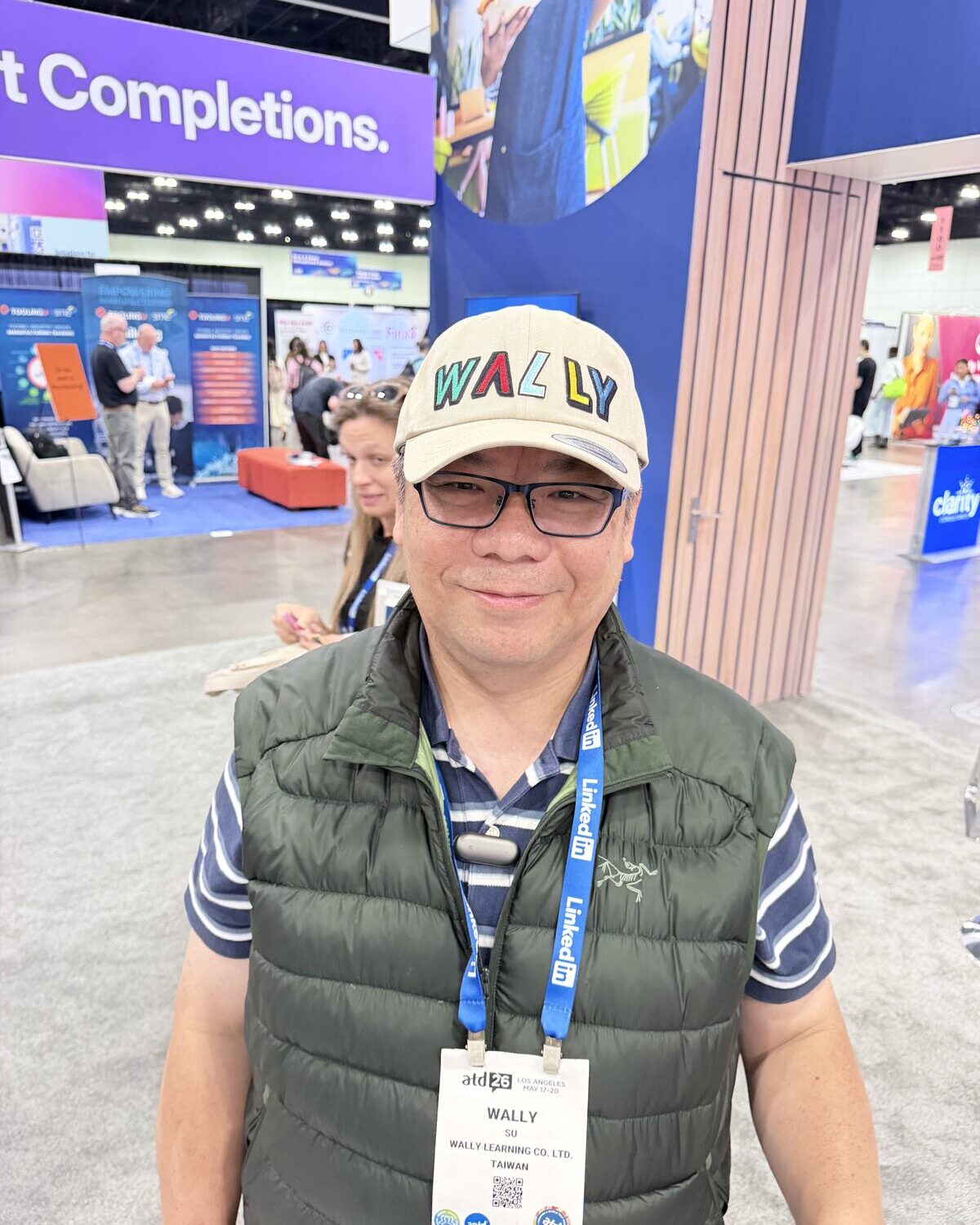
Second custom decorated cap showing a different front panel treatment
A second front-panel treatment from the same companion lane.
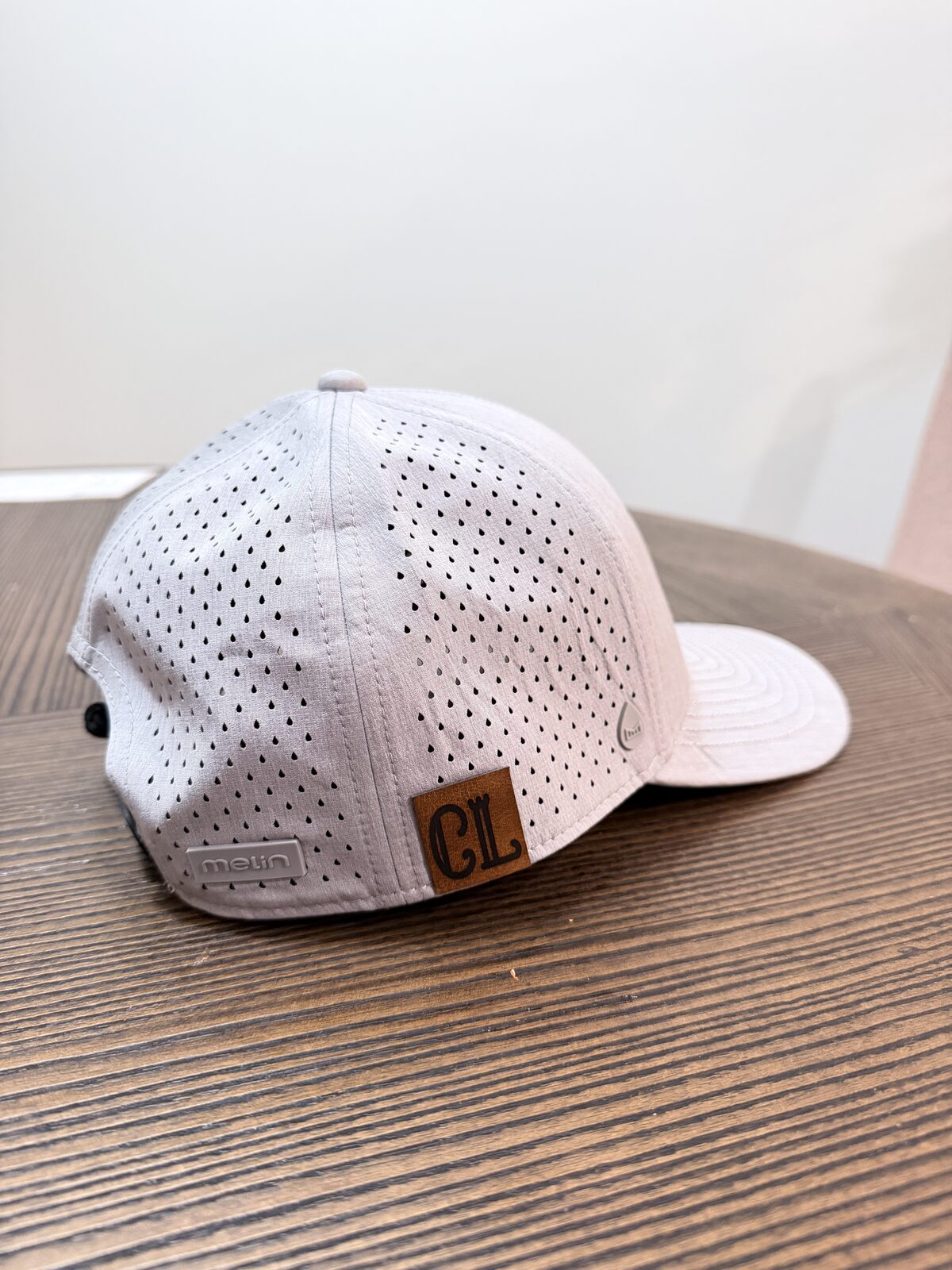
Cap with a custom leather patch applied to the front panel
Leather patch on a cap front. Premium finish for programs where the takeaway needs to feel bought, not handed out.
UV DTF printer running a sheet of decals at an event table
Small-format output mid-run. Every station on this page travels on the same truck as the jersey lanes.

Read the deployment profiles behind these builds →

Next step

Want a build like one of these at your venue?

Send garment source, unit count, venue, and hours on the floor. We reply with lane count, crew size, and a written figure.

Request a scope sheet(562) 614-4800