Home / Deployments / Retail and jersey shops
Deployment type B
In-store jersey personalization for retailers and jersey shops.
A personalization counter turns inventory you already stock into a higher-margin, made-for-me purchase. It also puts a heat press next to goods a customer has already paid for, which changes how the operation has to be run.
What retail changes about the buildB.1
Footprint is tight
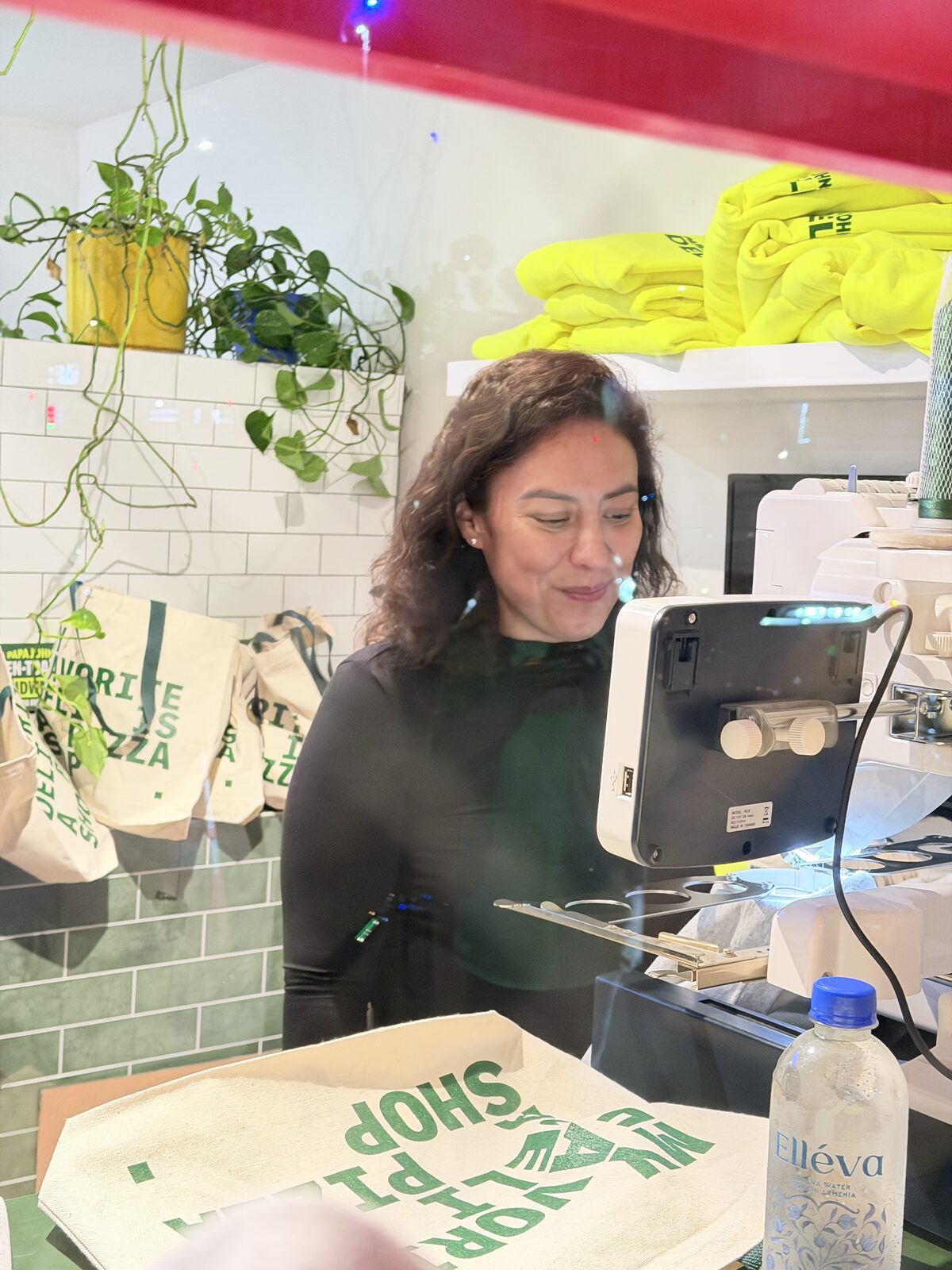
Store floors do not have back-of-house to spare. Retail builds run compact — frequently one counter with a single press lane and a tablet at the end of it, sited so a queue forms along a wall rather than across a sightline. We survey the space and mark the footprint before the first shift.
Hours are long
Retail does not want a four-hour window; it wants the station live for the trading day. That is a staffing conversation, not an equipment one. Staffing bills at $250 per hour, so a ten-hour trading day is a very different line than a four-hour activation and should be planned as one.
The goods are already sold
Once a customer pays, the jersey is theirs and we are applying decoration to someone else's property. That raises the bar on the fabric test, the counted-in inventory, and the reprint policy — all three get agreed in writing before we open.
The counter workflowB.2
Retail personalization works best when the sale and the ticket are the same transaction. The customer picks the jersey, buys it with personalization as a line item, and the receipt number goes onto the ticket at the tablet. That single link solves most disputes before they happen: we can always show which paid transaction a given press job belongs to.
From there the sequence is the standard one. The tablet captures name, number, size, colorway, and location, and enforces the character limit — roughly nine characters on a name, one to three digits on a number — so the constraint is explained at the point of sale rather than at the press. Tickets queue to the lane. The operator presses. QC checks spelling, digits, placement, and adhesion against the ticket before it goes back over the counter.
Where a store's traffic is unpredictable, the ready-text option earns its place: a customer gets a message when the jersey is done and keeps shopping instead of standing at the counter. Retailers generally like that arithmetic.
Liability, fabric, and the reprint policyB.3
Every jersey line a store carries gets tested before we press a single customer's purchase. Sample garments from each lot go under the platen at controlled settings so we know what the fabric tolerates and whether it ghosts. Lots that fail get flagged and excluded from the personalization offer — better to lose one SKU from the program than to scorch a customer's $140 jersey.
The reprint policy is written before the first shift. Our error is our cost: we replace or re-press at no charge. A misspelling the customer typed themselves comes out of the reprint allowance in the agreement, and after that at cost of goods. Both cases are logged, and both show up in the end-of-day report.
Retail build reference
- Lanes
- 1–2
- Garments
- Store inventory
- Ticket link
- Receipt number
- Staffing
- $250 / hour
- Fabric test
- Per lot, before offer
- Report
- Daily count and reprint log
Next step
Running a personalization counter this season?
Send garment source, unit count, venue, and hours on the floor. We reply with lane count, crew size, and a written figure.